Kobelco’s Billion-Dollar Move.
 Share


What the CASE Takeover Means for the Construction Equipment Industry
In one of the biggest developments in the global construction equipment industry in recent years, Japanese manufacturer Kobelco Construction Machinery has announced an agreement to acquire a controlling interest in CNH Industrial’s construction equipment business.
The deal will bring CASE Construction Equipment, New Holland Construction and Eurocomach under the Kobelco umbrella, creating a formidable new force in the international machinery market.
But beyond the billion-dollar transaction, what does this mean for the existing dealer networks across Ireland and the UK, and why has Kobelco made its move now?
For many within the construction machinery industry, today’s announcement (Nov 9th) will have come as something of a surprise.
Kobelco, a manufacturer best known for its crawler excavators and cranes, has agreed to acquire a 70% controlling interest in CNH Industrial’s construction equipment division, with CNH retaining a 30% minority shareholding.
The agreement covers three established machinery brands: CASE Construction Equipment, New Holland Construction and Italian compact equipment specialist Eurocomach.
It is important to point out that this is not an outright acquisition of CNH Industrial. The group’s agricultural machinery operations, including Case IH and New Holland Agriculture, are not part of the transaction.
Under the proposed arrangement, CNH will transfer its construction equipment operations into a newly established company, with Kobelco subsequently acquiring the majority shareholding.
The transaction remains subject to regulatory approval and other closing conditions. Until completion, the companies will continue operating under their existing arrangements.
Nevertheless, the announcement represents a significant shift in the global construction machinery landscape, with potentially far-reaching consequences for manufacturers, distributors and dealers.
Why has Kobelco made its move now?
There are several reasons why this transaction makes sense for both parties.
For Kobelco, the acquisition provides something that would otherwise take many years and considerable investment to build: a substantially broader machinery portfolio, an established international distribution network and access to markets where the Japanese manufacturer has traditionally had a smaller presence.
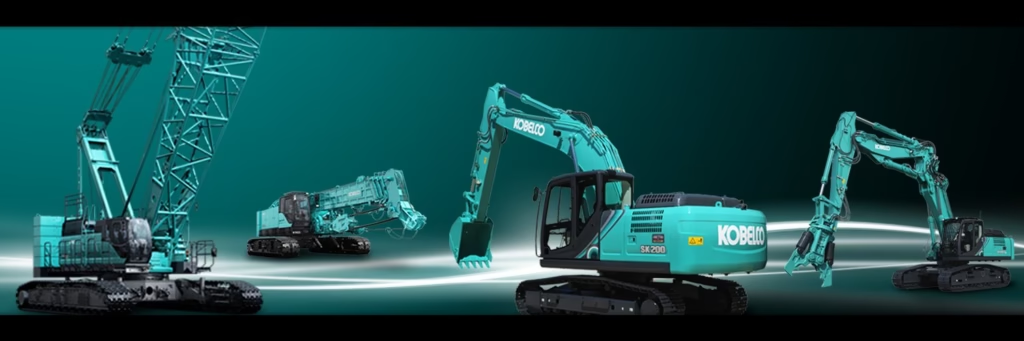
Kobelco has earned an enviable reputation for the performance, reliability and fuel efficiency of its hydraulic excavators. However, unlike some of its larger competitors, its product offering remains concentrated on excavators and cranes.
CASE brings wheel loaders, backhoe loaders, skid steer loaders, compact track loaders, dozers and motor graders into the equation. Eurocomach adds further strength in the compact equipment sector.
Together, these businesses could provide Kobelco with a much broader offering for construction contractors, plant hire companies and infrastructure operators.
The geographic advantages are equally important.
CASE has an established presence throughout North America, Europe and Latin America, supported by an extensive dealer network. These are markets where Kobelco sees opportunities to expand its reach without having to develop an entirely new distribution structure from scratch.
There is also the question of technology.
Kobelco has invested heavily in machine automation, remote operation and digital construction solutions, including its K-DIVE remote-control technology.
The partnership could accelerate the development of intelligent machinery, combining Kobelco’s excavator expertise with CNH’s navigation, positioning and precision technology capabilities.
For CNH, the reasoning is somewhat different.
The company has been simplifying its operations and concentrating increasingly on its agricultural machinery business. Selling a controlling interest in construction equipment allows it to release capital, reduce debt and focus investment on its agricultural brands and technologies.
CNH will receive approximately $700 million in cash, subject to adjustments, while retaining a 30% interest in the new construction equipment business.
The transaction values the construction division at approximately $1 billion.
Importantly, CNH is not walking away completely. Its retained shareholding gives it an ongoing interest in the success of the new business, while its agricultural dealers will continue to have access to construction equipment supplied through the joint venture.
What happens to the CASE dealer network?
This is arguably the biggest question for distributors across Ireland and the UK.
CASE has spent considerable time and resources strengthening its dealer representation in both markets, with several new appointments announced during 2026.
In Ireland, SAMCO Plant Sales was appointed as an authorised CASE Construction Equipment dealer for Munster in July. The appointment was particularly interesting given SAMCO’s existing relationship with CNH through its CASE IH agricultural machinery operations.
Across the UK, CASE has also expanded its representation, including the appointment of Ernest Doe & Sons in the South East and East Anglia, and Hamstead Plant in the West Midlands.
These are established machinery businesses that have invested in facilities, personnel, technical training, parts support and customer relationships to represent the CASE brand.
Naturally, the announcement raises questions about how these arrangements might evolve under Kobelco’s majority ownership.
However, there is an important distinction between what has been announced and what might happen further down the road.
At present, neither Kobelco nor CNH has announced plans to merge, terminate or restructure the existing CASE dealer network.
Indeed, CNH has specifically stated that customers will continue to receive sales, servicing and aftermarket support through existing channels.
For dealers who have only recently secured CASE franchises, that commitment will be particularly welcome.
The real test will come after completion, when the new management team begins examining the opportunities available through closer cooperation between the brands.
Kobelco dealers face an interesting future
The position of existing Kobelco dealers is equally interesting.
In Ireland, McSharry Bros of Roscommon has been a long-established name associated with Kobelco excavators, building its reputation around the Japanese manufacturer’s specialist machinery offering.
In the UK, the situation is particularly noteworthy.
Kobelco’s established distributor, Molson Group, with the company announcing that it had entered administration on 6th November.
That development is separate from the CNH transaction, but its timing creates an additional question around Kobelco’s future UK distribution arrangements.
An expanded machinery group with both Kobelco and CASE products could prove attractive to established distributors seeking a comprehensive equipment franchise.
Equally, Kobelco may decide that retaining distinct dealer networks offers the best opportunity to maximise sales and preserve the identity of each brand.
It would be premature to suggest either outcome is inevitable.
Could CASE and Kobelco eventually share dealers?
There are obvious commercial arguments both for and against integrating the two networks.
From a manufacturer’s perspective, shared distribution could offer considerable efficiencies in parts supply, technical support, training, logistics and administration.
A dealer representing both brands might also benefit from offering a wider selection of equipment to customers, particularly where the products complement rather than compete with one another.
A contractor purchasing a Kobelco crawler excavator could potentially source a CASE wheel loader or backhoe loader through the same organisation.
For rental companies, the attraction of dealing with one supplier for a broader range of equipment is equally obvious.
However, there are complications.
Both Kobelco and CASE manufacture hydraulic excavators, creating direct competition within parts of their respective product ranges.
Would an existing CASE dealer welcome a Kobelco excavator competing with its established CASE offering? Equally, would a specialist Kobelco dealer be comfortable introducing another excavator brand into its showroom?
There are also significant investments already made by existing dealers, many of whom have spent years building their businesses around particular manufacturers.
Franchise agreements, territories, customer relationships and existing product commitments would all have to be considered.
For those reasons, an immediate merger of the networks appears unlikely, particularly given the commitment to maintaining current customer support arrangements.
A more realistic possibility, in our assessment, is gradual cooperation in selected areas, potentially involving parts, technical services, procurement and complementary product distribution.
Whether that eventually extends to shared dealerships remains to be seen.
What about the machinery itself?
For contractors and plant hire businesses, the long-term product implications could be significant.
Kobelco has traditionally concentrated on its core strengths in hydraulic excavators, while CASE has developed a much wider product portfolio.
Combining the engineering expertise of both manufacturers could lead to opportunities for common components, improved manufacturing efficiencies and the development of new machinery.
There may also be opportunities to share technology across product ranges, particularly in machine control, telematics, remote operation and alternative power systems.
Kobelco’s K-DIVE technology is a particularly interesting example, allowing excavators to be operated remotely from a dedicated control station.
As the construction industry faces increasing pressure to improve productivity, address operator shortages and reduce environmental impact, such technologies are likely to become more important.
However, customers should not expect immediate changes to existing machinery ranges.
The manufacturers have not announced plans to discontinue particular models, replace existing excavator ranges or introduce jointly developed machines.
Those decisions, if taken, are likely to emerge over several years rather than months.
What does it mean for parts, servicing and warranties?
For existing machinery owners, continuity of aftermarket support will be a priority.
Both companies have moved to reassure customers that existing parts supply arrangements, warranties, servicing and customer contact points remain unchanged.
CNH Capital will also continue providing finance, leasing, rental and insurance products to customers and dealers of the new venture.
This is particularly important for contractors operating mixed fleets and rental businesses that depend on reliable access to replacement parts and technical support.
In the longer term, the enlarged group could benefit from economies of scale in parts distribution, procurement and logistics.
However, it would be wrong to assume that combining the businesses will automatically result in cheaper parts or lower machinery prices.
Those benefits will depend on how effectively the two organisations integrate their operations.
A new force in the global machinery market
There is little doubt that this transaction has the potential to reshape the competitive landscape.
Kobelco will gain access to a much broader range of machinery and a significantly expanded international customer base, while CNH’s construction equipment brands will become part of a group whose principal focus is construction machinery.
That specialist focus could prove particularly valuable.
For years, CASE Construction Equipment has operated within a much larger industrial organisation with substantial interests in agricultural machinery.
Under the proposed arrangement, the construction business will have a majority shareholder whose expertise and commercial priorities are closely aligned with its own activities.
That may create opportunities for more targeted investment, faster product development and a stronger competitive position against established global manufacturers.
There will inevitably be challenges, particularly in bringing together different corporate cultures, manufacturing operations and distribution strategies.
But the potential advantages are considerable.
The UK Plant Operators Magazine Comment.
For the Irish and UK construction equipment industry, the most immediate impact of this announcement is likely to be uncertainty rather than change.
Dealers will understandably want reassurance about their franchise agreements, territories, future product availability and long-term investment plans.
Customers will want to know that the machinery they purchase today will continue to receive the same levels of service and support tomorrow.
For now, the manufacturers have been clear that existing arrangements remain in place.
The more interesting developments may emerge once the transaction is completed, currently expected by the end of 2027.
At that point, the new group will have some important decisions to make about how its brands, products and dealer networks operate alongside one another.
One thing is certain: Kobelco has made a bold move that could substantially strengthen its position in the global construction machinery market.
For CASE, New Holland Construction and Eurocomach, it marks the beginning of a potentially significant new chapter.
And for the dealer networks across Ireland and the UK, the next 18 months could prove particularly interesting.
The question is no longer simply whether Kobelco can compete with the world’s largest full-line construction equipment manufacturers. It is how quickly this new partnership can turn its expanded product portfolio, technology and distribution network into a competitive advantage.
Share